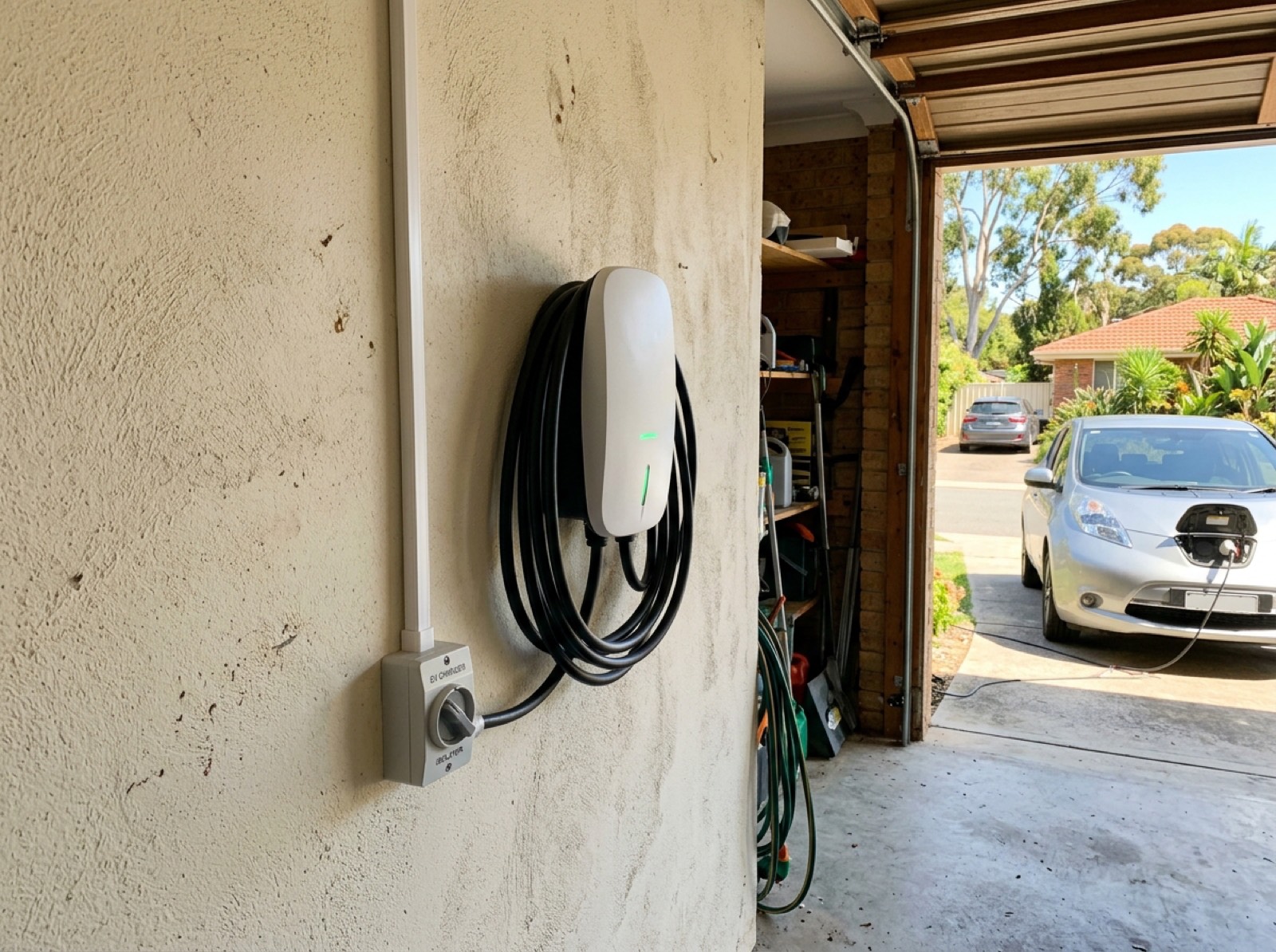
For the large majority of homes, 7kW is the right choice. It adds roughly 40 kilometres of range per hour, so an overnight charge covers far more than a typical day of driving. A 22kW charger needs three-phase power, costs more to install, and only makes sense if you genuinely need to refill a large battery quickly and repeatedly during the day.
This is the most common question that comes up once someone has decided to put a charger in. Faster instinctively sounds better, and for a handful of households it genuinely is. For most people it is money spent on a problem they do not have.
What do the numbers actually mean?
A 7kW single-phase charger adds roughly 40 kilometres of range for every hour it runs. Left on overnight for ten hours, that is around 400 kilometres put back into the car. The average Australian drives well under 50 kilometres a day.
A 22kW charger needs three-phase power and can add roughly three times that per hour. It is genuinely faster, and the question is simply whether you need speed you will use.
When is 7kW the right answer?
- You charge at home overnight, which is how most people charge.
- Your daily driving is normal commuting, school runs and errands.
- Your home is single-phase, like most homes on the coast.
- You would rather put the difference toward the car, or toward the switchboard work that makes the install sound.
When is 22kW worth considering?
- Your property already has three-phase power. This is the big one. Bringing three-phase in purely for a charger is rarely worth it.
- You run more than one EV and they compete for the charger.
- You drive long distances and need a genuine top-up in the middle of the day, not just overnight.
- You have a large battery vehicle and regularly arrive close to empty.
The part people miss: your car has a limit too
Plenty of EVs cap their onboard AC charging at 7kW or 11kW regardless of what the wall unit can deliver. Fitting a 22kW charger to a car that will only accept 7kW on AC achieves nothing except a larger bill. It is worth checking your vehicle's specification before deciding, and it is one of the first things worth mentioning when you ask for a quote.
What about the switchboard?
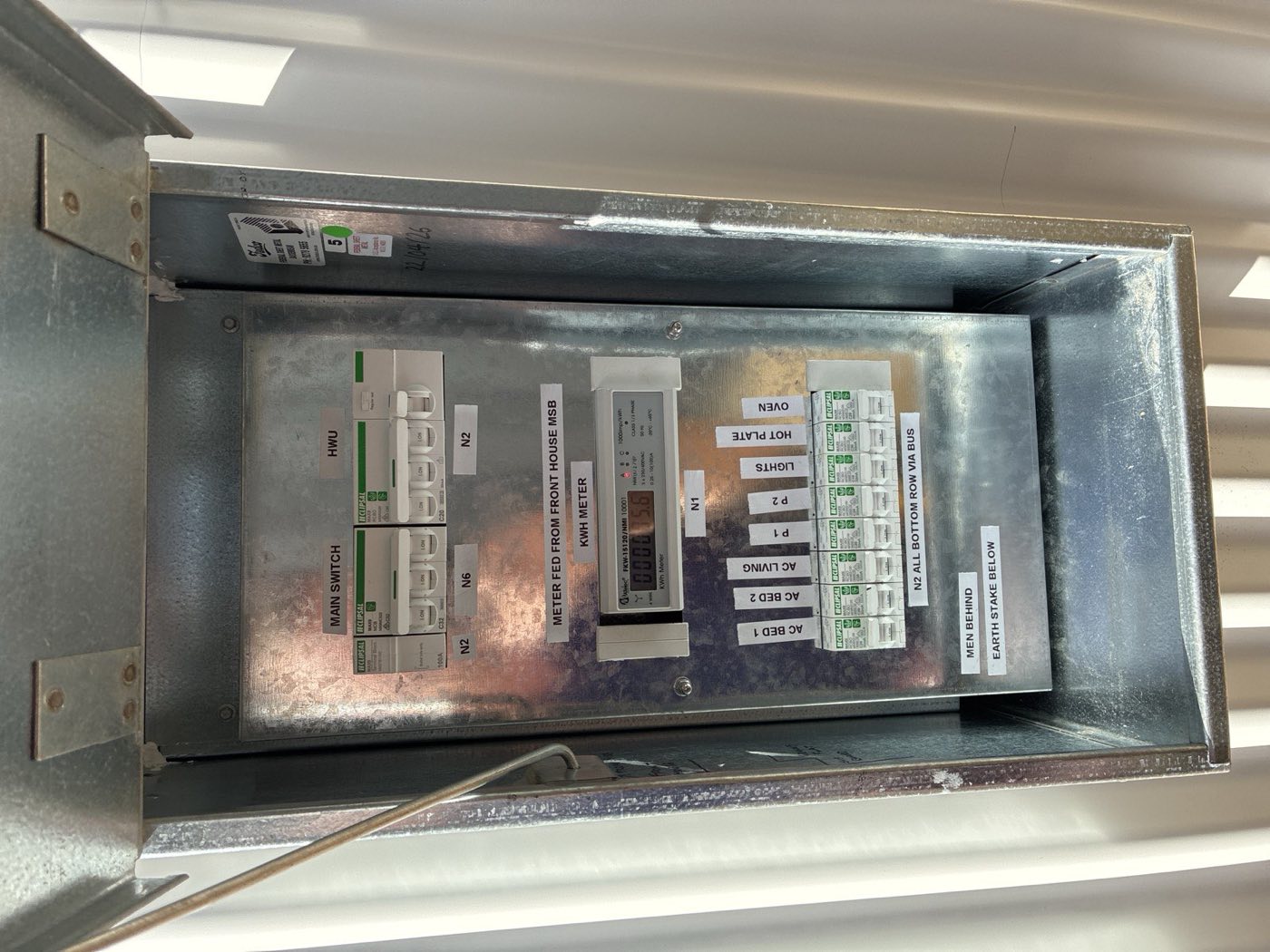
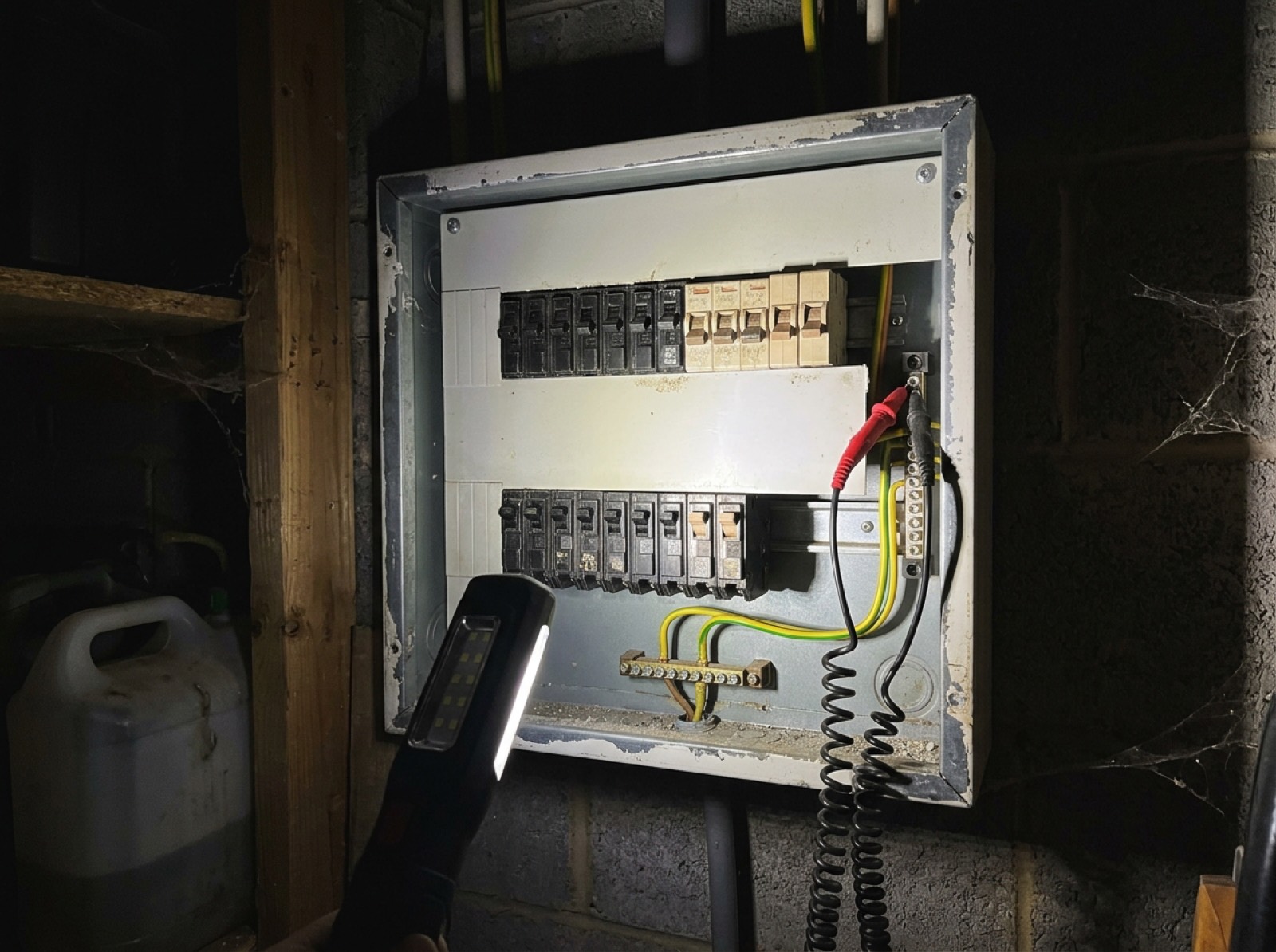
Either way, the board is what decides whether the install is straightforward. A 7kW charger already represents a significant continuous load, and a 22kW three-phase unit more so. If the board has no spare capacity or no RCD protection, that gets sorted first regardless of which charger you choose. This is covered in more detail in our EV charger cost guide.
The short version
Buy the charger that matches your car, your driving and the supply you already have. For most homes across Hillarys, Duncraig and the rest of the coastal strip, that is a well installed 7kW unit on a healthy switchboard. If you are genuinely in the smaller group who benefit from three-phase, that is worth knowing before you buy rather than after.
Not sure which side of the line you are on? Describe your car and your driving when you ask for a quote and you will get a straight recommendation, including when the answer is the cheaper option.
Want a real figure for your job?
Every place is different. Send through what you need and Oliver will give you a fixed price in writing.